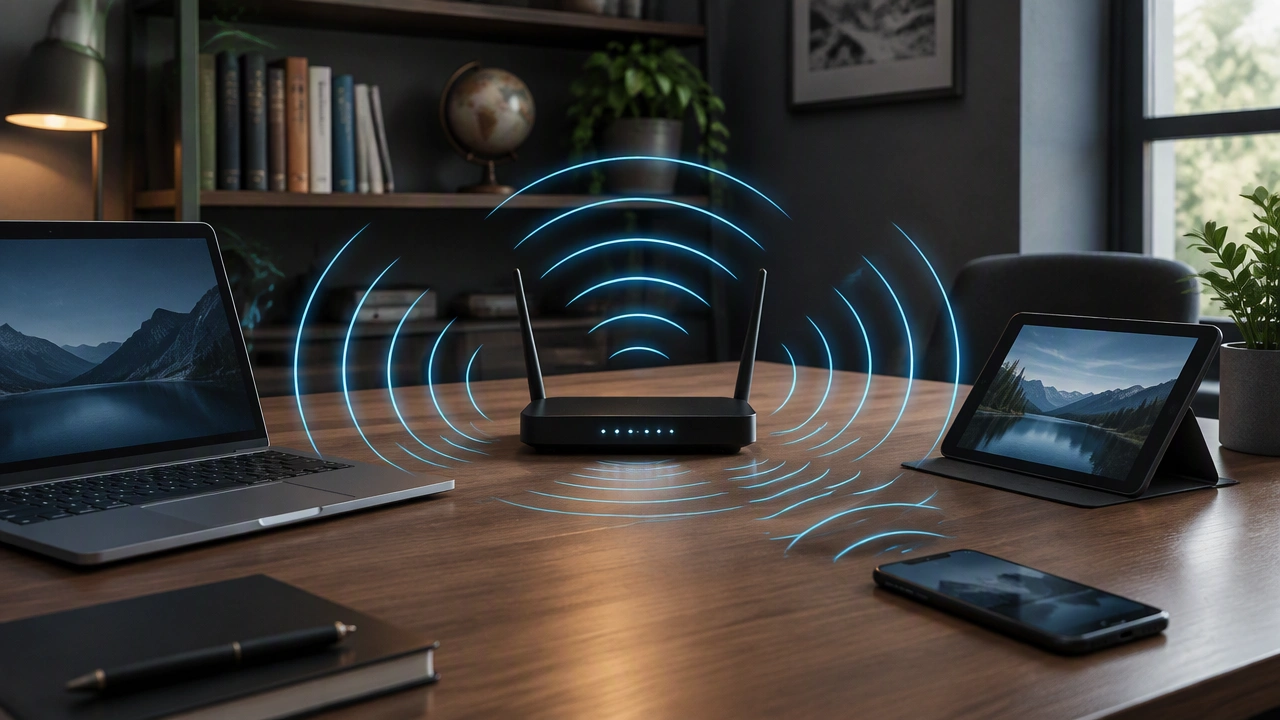
Wi-Fi is something most students use every day without thinking about the technology behind it. At its core, Wi-Fi uses radio waves to transmit data between your device and a router. The router connects to the internet through a wired connection, then broadcasts signals on specific frequency bands, typically 2.4 GHz and 5 GHz. Your device receives these radio signals and converts them into the data that loads your web pages, streams videos, and sends messages. Walls, distance, and interference from other electronics can weaken the signal, which explains why connection quality varies around your home or campus. Understanding basic networking concepts like IP addresses, DNS, and DHCP helps you troubleshoot connection issues independently. Learning about network topology, bandwidth, and latency gives you a foundation for more advanced IT studies. Try using tools like ping and traceroute to see how data travels across networks in real time.